


Yubo: Make friends & chat now
3.931.90K Reviews
App Specs
- Version
- 4.301.0
- Updated On
- License
- Free
- Downloads
- 10,000,000+
- Developer
- Twelve APP
- Categories
- Social
- Platform
- Android, iOS
Screenshots

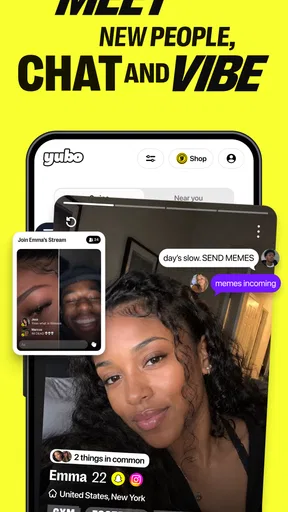
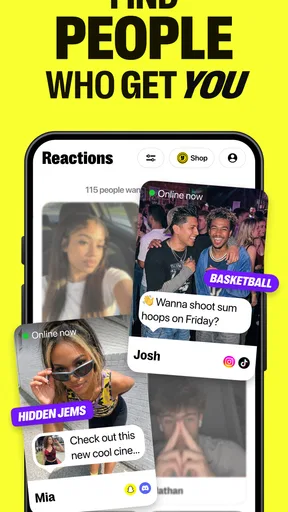
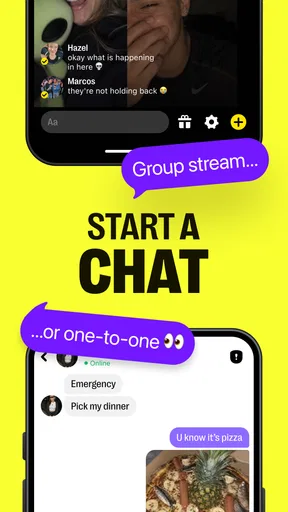
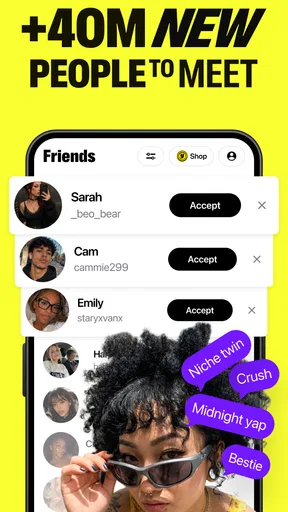

 Analysis by AppCompare
I tested Yubo as a social app built around meeting people beyond your existing circle. Its central appeal is simple: instead of waiting for a friend request from someone you already know, you can use it to chat and make friends around the world. That sounds straightforward, but the real experience depends heavily on how actively you shape your conversations and how carefully you manage your boundaries.
My overall impression is that Yubo feels more immediate than traditional social networks. It is less about maintaining a polished public profile and more about starting conversations with people you may never have encountered offline. That makes it exciting when you are open to new connections, but also more demanding. You need patience, good judgment, and a willingness to leave conversations that go nowhere.
Meeting strangers is the feature that defines Yubo
The app comes from Twelve APP and sits in the social category, with a mature 17+ content rating. It is free to download, although optional in-app purchases range from $4.99 to $94.99 per item. The current version is 4.301.0 and requires at least iOS or Android 10, so anyone using an older device should check compatibility before planning around it.
What makes Yubo different from a conventional messaging app is the starting point. WhatsApp, Messenger, and similar tools are usually strongest when you already know the other person. Instagram can help you discover people through shared interests, but much of the interaction still revolves around following, posting, and reacting. Yubo puts the act of meeting someone new closer to the center of the experience.
That distinction changes the emotional rhythm. A normal social feed gives me something to browse even when I do not want to talk. Yubo is more useful when I arrive with a purpose: I want to meet people, exchange a few messages, and see whether a genuine conversation develops. If I only want passive entertainment, other social platforms are usually more comfortable.
The app’s worldwide angle is also important. A conversation can begin with a difference in location, background, or daily routine rather than a shared school, workplace, or friend group. I found that this can make small talk more interesting, but it can also make it harder to find common ground. A good opening message matters more when there is no mutual connection doing the work for you.
I would not describe Yubo as a replacement for every social app. It is better understood as a social discovery space. The value comes from the possibility of a new conversation, not from building a carefully organized archive of posts or keeping up with people I already know.
Worth Reading Before You Choose

EA SPORTS FC Mobile 26 Is a Bigger Football Game, but It Takes Time

Flipboard Shows What News Apps Must Do Beyond the Feed

Switching to Android Auto Means Rethinking Your Driving Routine

Google Calendar Makes a Crowded Week Easier to Manage

Ludo King Makes the Most of the Minutes Between Plans

Baby Panda World Brings Quick Play to Modern Phones, but Its Game Library Feels Busy
What using it feels like day to day
In practical use, I would approach Yubo with a short session in mind rather than leaving it open all day. I might check it during a commute, after school, or while taking a break, look for a conversation that seems promising, and then decide whether it deserves more time. This keeps the app from becoming an endless search for attention.
The first useful habit is to make my own profile communicate something specific. A vague profile gives strangers very little to respond to, while a clear interest creates an easy opening. Mentioning a favorite type of music, a hobby, a language I am learning, or a game I enjoy gives a new contact a natural question to ask. This is a small change, but it has a bigger effect than simply adding more generic information.
I also learned not to judge the entire app by the first few interactions. Social discovery is uneven. Some chats end after a couple of messages, some feel one-sided, and a few may become surprisingly engaging. That unevenness is not a technical flaw, but it is part of the cost of meeting strangers. Anyone expecting every interaction to become a friendship will probably find the experience tiring.
A realistic example would be a student who has moved to a new city and wants casual conversation before feeling ready to join local groups in person. Yubo can provide a low-pressure first step: talk with people from different places, compare routines, and gradually learn what kind of contact feels comfortable. It does not automatically solve loneliness, but it can make the first move less intimidating.
For someone who already has a clear interest, the app is easier to use well. Instead of opening with “Hi,” I would ask about a shared subject or respond to something visible in the other person’s profile. That makes the conversation feel less like a random audition and more like an exchange. It also helps filter for people who actually want the same kind of interaction.
How to turn a match into a worthwhile conversation
The most useful workflow is to treat the first exchange as a quick compatibility check, not as a commitment. I would look for basic signs of reciprocity: does the other person ask questions, respect the pace of the conversation, and respond to what I actually say? If the answer is consistently no, there is little reason to keep investing effort.
Another practical tip is to move slowly even when a conversation feels unusually friendly. A stranger can seem familiar after a lively chat, but familiarity is not the same as trust. I would avoid sharing identifying details, private contact information, or anything that could make it easy for someone to locate me offline. This is especially important because the app is intended for a mature audience and encourages contact with people outside an existing social circle.
I would also decide in advance what I am looking for. “Making friends” can mean exchanging occasional messages, finding people with a shared hobby, practicing a language, or building a more regular connection. If I do not know which of those I want, I may interpret a normal casual chat as disappointing simply because it did not become something deeper.
One less obvious trade-off is that worldwide discovery can create time-zone friction. A person may be interesting but unavailable whenever I am free. Differences in language can have the same effect: translation or simplified wording may help begin a conversation, yet humor and nuance do not always carry across easily. These are not reasons to avoid the app, but they are realistic limits on how quickly a friendship can develop.
I would keep notifications under control as well. A social app designed to encourage replies can easily pull attention away from work, study, or sleep. Checking at chosen times makes the experience feel more intentional. It also prevents the conversation from becoming a test of how quickly either person responds.
The strongest scenario: finding connection outside an established circle
Yubo makes the most sense for a person who wants to widen their social world but does not want every new connection tied to their real-life network. Someone who has changed schools, started remote study, moved away from home, or simply feels stuck in the same group may appreciate the chance to begin conversations without waiting for an introduction.
It can also suit people who enjoy cultural exchange. A short chat about daily routines, local food, music, or slang can be more memorable when it comes from someone living somewhere else. The worldwide focus gives ordinary subjects a fresh angle. A conversation about a familiar hobby may still feel new because each person approaches it from a different environment.
For this scenario, I would recommend setting a modest goal: have one or two respectful conversations rather than trying to collect as many contacts as possible. Quality is easier to notice when the objective is clear. If a person is responsive, curious, and comfortable with reasonable boundaries, the connection can develop naturally. If not, moving on is part of using the app effectively.
The app is less suitable for younger users, not only because its rating is 17+, but because meeting unknown people requires mature decision-making. Parents or guardians looking for a tightly controlled communication tool should consider whether an open social-discovery format matches their expectations. Yubo is also not the best choice for someone who wants a private group chat with known contacts; a conventional messenger is more direct for that purpose.
Where the experience can become frustrating
The biggest limitation is inconsistency. Because the app brings together people with different goals, not every interaction will be meaningful. Some users may want quick attention, others may be looking for ongoing friendship, and some may simply browse without making much effort. The app can create opportunities, but it cannot guarantee compatible personalities.
There is also a difference between visibility and connection. Being able to encounter many people does not necessarily make it easier to find the right person. In fact, a large pool can encourage rapid judgments. I found it more useful to slow down and read for signs of shared interests than to treat every new profile as equally promising.
Safety is another area where personal responsibility matters. I would keep conversations inside the app until trust has developed, avoid sending sensitive images or information, and stop responding when someone becomes pushy, insulting, or manipulative. A social platform can provide tools and settings, but no feature replaces careful decisions. If a conversation creates pressure rather than comfort, ending it is the correct outcome.
Optional purchases are worth considering before spending money. The app itself is free, but the presence of paid items means some parts of the experience may encourage upgrades. I would use the free version first and decide whether it genuinely fits my habits before paying for anything. There is no reason to spend simply because a conversation has not gone well; social compatibility cannot be bought.
The average rating is 3.9 from around 414 thousand ratings, while the app has passed 10 million installs. Those figures suggest a substantial audience, but they should not be read as a promise that every user will have the same experience. A large community improves the chance of finding someone compatible, yet it also increases the range of behavior and expectations I may encounter.
How Yubo compares with familiar alternatives
Compared with WhatsApp or Messenger, Yubo is better when I want to meet someone new and worse when I need dependable communication with people I already know. A messenger assumes an existing relationship; Yubo is designed around creating the possibility of one. That makes it more exploratory but less predictable.
Compared with Instagram, it feels less centered on public presentation and ongoing content consumption. Instagram is useful when I want to follow interests, watch short content, or keep up with people I recognize. Yubo is more conversation-led. If my priority is discovering creators or maintaining a visual feed, Instagram may be the better fit. If my priority is direct social discovery, Yubo has the clearer purpose.
Compared with dating-focused services, Yubo is a better match for people who want friendship and casual social contact rather than a platform organized around romantic matching. That does not remove the need for boundaries, but it changes the reason for joining. I would choose it when I want broader conversation, not when I am specifically searching for a dating workflow.
One practical advantage over local-only communities is the ability to encounter people beyond my immediate surroundings. The trade-off is that distance, time zones, and different expectations can make an ongoing friendship harder to maintain. A local group may be better if I want to meet in person; Yubo is stronger when the conversation itself is the main goal.
Who will get the most from it
I think Yubo is most rewarding for socially curious adults and older teens who are comfortable starting conversations, accepting occasional silence, and protecting their privacy. It suits someone who sees meeting people as an active process rather than expecting an algorithm to deliver a perfect friend immediately.
It is particularly useful for people who want to practice conversation, explore international perspectives, or break out of a familiar social routine. The app can also help someone test what kinds of friendships they want: short casual chats, shared-interest contacts, or longer-term online connections. That self-knowledge is one of its quieter benefits.
I would skip it if I dislike talking to strangers, feel pressured by frequent social interaction, or mainly need a reliable tool for existing friends. I would also choose another option if meeting people locally is essential, because an international social space cannot replace a neighborhood group or in-person activity.
My recommendation is to try it with clear boundaries and a specific intention. Build a profile that gives people something real to discuss, start with shared interests, keep early conversations light, and do not confuse fast replies with trust. The best results come from using Yubo as a doorway to conversation, not as a machine for instant friendship.
With its free entry point, mature audience, and large international community, Yubo has a clear role in the social-app landscape. It is not effortless, and it is not equally comfortable for everyone. In my experience, its strength is the chance to step outside an established circle; its weakness is that the quality of what comes next depends almost entirely on the people involved and on how thoughtfully I use it.
For readers who want to chat with unfamiliar people around the world and are prepared to manage the uncertainty that comes with that, I can recommend giving it a careful try. For anyone seeking private messaging, tightly defined communities, or guaranteed meaningful exchanges, a more focused alternative will probably feel better.
Pros
- Easy way to meet people through live video and swipe discovery.
- Live streams support group interaction rather than only one-to-one chats.
- Interest tags help connect users with people who share similar hobbies.
- Available on both Android and iOS with a modern
- colorful interface.
- Safety tools include blocking
- reporting
- and age-focused community controls.
Cons
- Conversations can feel brief or superficial
- especially with new matches.
- Live video features may use significant mobile data and battery power.
- The large social environment can expose users to unwanted messages or behavior.
- Some features and visibility options may depend on paid upgrades.
- Requires careful privacy settings because profiles and live activity are social by design.
FAQs for Yubo: Make friends & chat now
What is Yubo: Make friends & chat now?
Yubo is a social discovery app designed to help users meet new people, chat, and join live video streams. Instead of focusing mainly on existing contacts, it encourages conversations with people who share similar interests. Users can create a profile, browse potential connections, send messages, and participate in live sessions. The experience is built around spontaneous interaction, so it may feel more open-ended than a traditional messaging app.
Is Yubo safe for teenagers and younger users?
Yubo includes age-based communities, reporting tools, blocking options, moderation features, and safety guidance, but no social platform can remove every risk. Parents and younger users should review privacy settings carefully, avoid sharing personal information, and be cautious when communicating with strangers. It is also important to check the current age requirements and regional availability before downloading, since rules and features may change over time.
Does Yubo require payment or offer in-app purchases?
Yubo can generally be downloaded and used without paying, allowing users to create profiles, discover people, chat, and access core social features. However, the app may offer optional paid upgrades, virtual items, or subscription-style benefits that improve visibility or provide additional interaction tools. Before confirming a purchase, review the price, billing frequency, renewal terms, and cancellation process through the relevant Android or iOS store.
What can users do on Yubo besides private messaging?
The app is centered on more than one-to-one conversations. Depending on the current version and location, users may be able to join or host live video streams, participate in group discussions, react to content, and connect through shared interests. These features make Yubo feel more like a live social community than a standard chat app, although the quality of interactions depends heavily on the people active at the time.
What privacy settings should be checked before using Yubo?
Before starting, review who can contact you, how your profile is discovered, what information is visible publicly, and whether location-related details are being used. Avoid displaying your school, home address, phone number, daily routine, or other sensitive information. You should also learn how to block and report accounts, enable available safety controls, and regularly review permissions such as camera, microphone, notifications, and location access.


